Explore our leading collection of professional cosmetic and pharmaceutical packaging engineered for ultimate chemical stability and brand appeal.
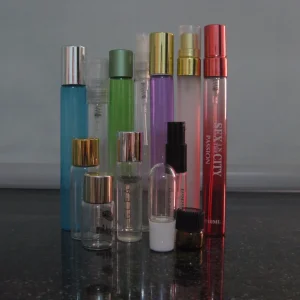
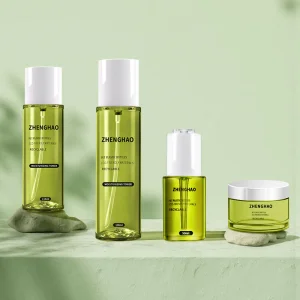
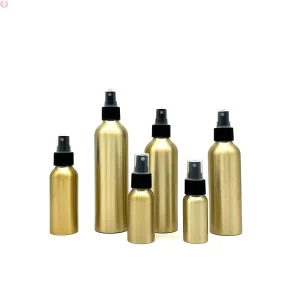
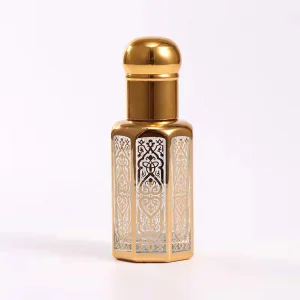
Understanding the critical role of material science in high-grade packaging solutions.
In the highly regulated fields of pharmaceuticals, biological engineering, and high-performance cosmetics, container selection is not merely a question of aesthetic appeal; it is a critical variable impacting chemical stability, safety, and shelf-life. Borosilicate glass vials—recognized globally for their low coefficient of thermal expansion and outstanding hydrolytic resistance—represent the benchmark for liquid preservation. According to the United States Pharmacopeia (USP) and European Pharmacopoeia (EP) specifications, USP Type I Neutral Borosilicate Glass is the most inert and resistant packaging material available, containing approximately 80% silica, 10% boric oxide, and minor amounts of sodium and aluminum oxides.
This comprehensive industry report addresses the macro-economic forces, engineering demands, and regional industrial advantages driving the global borosilicate glass vial supply chain. Designed for Chief Procurement Officers (CPOs), Packaging Engineers, and Quality Assurance Directors, this whitepaper evaluates the defining elements of the top 10 global manufacturers, explains the unique structural benefits of Chinese manufacturing clusters, and identifies critical variables for cross-border sourcing, custom printing, and regulatory compliance.
To accurately evaluate top-tier vial suppliers, one must comprehend the material properties distinguishing borosilicate glass from alternative compositions. Soda-Lime glass (USP Type III or treated Type II) contains a high ratio of sodium oxide (soda) and calcium oxide (lime). When exposed to aqueous formulations, particularly those with fluctuating pH ranges, soda-lime glass experiences significant ion exchange, causing alkaline ions to leach into the product. This can destabilize active pharmaceutical ingredients (APIs), cause delamination, or degrade sensitive cosmetic peptides and serums.
In contrast, Neutral Borosilicate Glass contains a high content of boron trioxide ($B_2O_3$). This creates a tightly knit, three-dimensional silica-oxygen-boron network that reduces thermal expansion (approx. $3.3 \times 10^{-6}/\text{K}$ for expansion 33 glass or $5.0 \times 10^{-6}/\text{K}$ for expansion 50 glass). As a result, borosilicate vials are highly resistant to thermal shock, allowing them to easily transition from sub-zero lyophilization (freeze-drying) temperatures ($-80^\circ\text{C}$) to high-temperature sterilization autoclaves ($121^\circ\text{C}$). This makes them ideal for advanced applications like skincare ampoules, vaccines, and high-end essential oils.
How the top 10 global manufacturers are assessed on quality, innovation, and production capacity.
Top manufacturers utilize laser-controlled forming systems. Inner and outer neck diameters must meet micro-level tolerances to ensure an airtight seal when capped, preventing leakage or oxidation.
Evaluating the chemical inertness of the inner vial wall. Compliance with USP <660> (glass grains test) and USP <1660> (evaluation of glass inner surface durability) is mandatory for high-tier suppliers.
Delamination—the shedding of microscopic glass flakes—is a critical failure mode. Tier 1 factories optimize their heat treatments and forming temperatures to eliminate glass surface micro-fissures.
The capacity to provide high-end, in-house decoration including silk-screen printing, vacuum metallization, electrostatic powder coating, frosted effects, and hot foil stamping.
Top manufacturers maintain highly automated, multi-row glass forming machines, continuous annealing ovens, and cleanroom packaging facilities to deliver millions of units monthly with short lead times.
Premium suppliers register Drug Master Files (DMF) with the FDA, and hold certifications such as ISO 15378 (primary packaging materials for medicinal products), ISO 9001, and GMP compliance.
A look at why global brands choose Chinese factories for technical expertise and cost efficiency.
While European and American manufacturers historically dominated the pharmaceutical glass sector, China’s borosilicate glass manufacturing clusters (predominantly in Guangdong and Shandong provinces) have undergone a massive technological transformation. Today, Chinese factories present an unmatched value proposition for global brands, combining cost efficiencies, advanced technology, and comprehensive finishing services.
By establishing manufacturing hubs in proximity to high-grade silica sand mines and chemical processing zones, Chinese factories reduce material transport costs. The close cooperation with local mold makers and mechanical engineers allows rapid prototype development from concept design to actual glass samples within 7-10 working days.
Modern Chinese glass factories have phased out manual blowing and low-tech tube forming. They now feature computerized servo-driven vertical and horizontal forming systems, online optoelectronic camera inspection machines (which scan for micro-cracks, bubbles, and dimensional variances at line speeds), and automated robotic tray loaders.
Unlike Western suppliers that require exceptionally high Minimum Order Quantities (MOQs) for custom designs, Chinese manufacturers offer flexible production runs. This agility allows startup cosmetic companies and pharmaceutical R&D labs to run trial batches, helping them test and optimize their packaging before scaling up.
A deep dive into our history, mission, capabilities, and one-stop custom services.
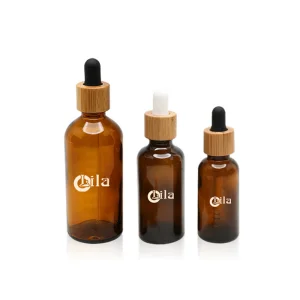
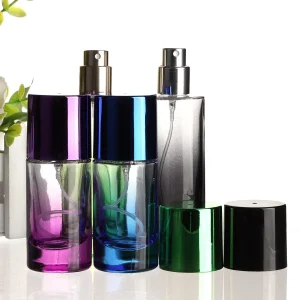
Dongguan Aurelia Glass Co., Ltd. specializes in premium glass packaging for cosmetics. Their products include water, lotion, cream bottles, essence bottles, perfume bottles, foundation liquid bottles, etc., all made of high-quality glass. We offer one-stop processing services such as surface sanding, color spraying, screen printing, and hot stamping for glass bottles.
The company firmly believes in the business philosophy of "Quality is the foundation, service is the essence, and talent is the soul", actively applying modern high technologies and convenient communication methods, combined with diverse information to serve global cosmetics brands.
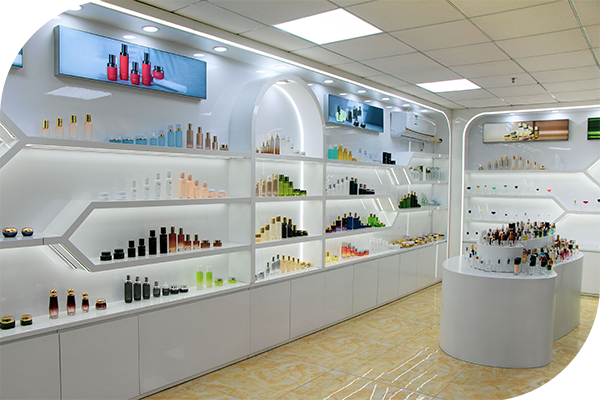
Dongguan Aurelia Glass Co., Ltd. is a supplier that integrates the design, development and production of cosmetic packaging products. It provides services specifically for cosmetic brands. Our Guangzhou Exhibition Hall offers a wide variety of products. In the cosmetics bottle exhibition hall, you can freely touch and experience. Various types of cosmetics bottles shine brightly under the lights, showcasing their unique texture charm. Here, you can find all kinds of products that suit your preferences.
Our mission is to become the most trusted packaging partner for global customers. We are committed to providing innovative, sustainable and high-quality packaging solutions to help brands stand out in the highly competitive market. Through continuous improvement of manufacturing technologies, optimization of operational processes and strict quality control standards, we have redefined the excellence in the packaging field to ensure that every detail meets the needs and visions of our customers.
By leveraging advanced automation, high-end surface treatments, and rigorous quality inspection protocols, Dongguan Aurelia Glass Co., Ltd. matches the quality standards of major global manufacturers. This commitment to quality and service has established our strong reputation among buyers across Europe, North America, the Middle East, and Asia.

A standardized checklist for evaluating borosilicate glass manufacturers and mitigating supply chain risks.
For procurement managers, evaluating cross-border glass manufacturers requires a careful balance of product cost, technical capabilities, and compliance. Below is our industry-standard decision matrix designed to help sourcing teams evaluate prospective borosilicate glass vial manufacturers during audit phases.
| Evaluation Parameter | Technical Requirement | Compliance Benchmark | Risk Mitigation Strategy |
|---|---|---|---|
| Glass Type & Composition | USP Type I Borosilicate Glass (Neutral, expansion 33 or 50) | EP 3.2.1, USP <660> | Request third-party composition testing reports (ICP-OES analysis) to verify boron trioxide ($B_2O_3$) content > 8%. |
| Dimensional Accuracy | Neck finish tolerances under ±0.1mm, wall thickness ratio < 1.5:1 | ISO 8362-1 (vial dimensions) | Use dual-axis laser measurement systems to inspect production runs and confirm compatibility with rubber stoppers. |
| Surface Treatments | Frosting, color spraying, metallization, hot stamping, silk-screen | Adhesion test (ASTM D3359) | Perform cross-hatch tape tests on finished decorations to ensure the coating does not peel during logistics or use. |
| Sterility & Cleanliness | Ready-to-Sterilize (RTS) or Ready-to-Use (RTU) packaged in ISO 5 cleanrooms | ISO 14644-1, ISO 15378 | Audit the manufacturer's cleanroom environment and request validation reports for pyrogens, bioburden, and particulate levels. |
| Logistics & Packaging | Vacuum tray packaging with shrink-wrap, shock-absorbing pallets | ISTA 3A (drop test) | Specify vacuum packaging with partition trays to prevent glass-to-glass friction and micro-abrasions during transit. |
Key technological and market trends shaping the future of glass vial manufacturing.
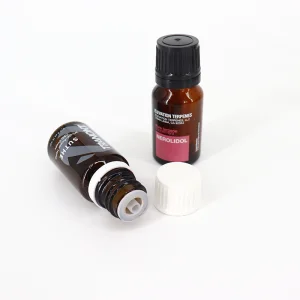
Modern cosmetic formulas increasingly incorporate active ingredients like peptides, retinol, vitamin C, and hyaluronic acid. These compound-rich mixtures are highly sensitive to UV exposure and chemical leaching. Sourcing teams are turning to amber borosilicate glass and frosted coatings, which block up to 99% of harmful ultraviolet light and preserve active ingredients without requiring excess preservatives.
As brands prioritize environmental sustainability, glass packaging manufacturers are reducing their carbon footprint. Key initiatives include upgrading to electric hybrid furnaces, utilizing oxygen-fuel combustion to lower carbon emissions, and integrating post-consumer recycled (PCR) glass. Because borosilicate glass is 100% recyclable, it is a key component of circular economy packaging strategies.
Top-tier glass factories are integrating smart automation across the production floor. AI-driven vision inspection systems capture high-speed, 360-degree images of every vial, checking for tiny bubbles, stones, structural stresses, and minor dimensional variances. This real-world implementation of machine learning reduces product defect rates to less than 50 parts per million (PPM).
Expert technical answers to common queries regarding borosilicate glass design and procurement.
Borosilicate glass (Type I) contains boron trioxide, which provides excellent chemical resistance and hydrolytic stability. It does not leach alkaline ions into the contents, protecting active ingredients like vitamin C, peptides, and acids from degradation. Soda-lime glass is less chemically inert and can cause pH shifts that destabilize active formulas.
Expansion 33 represents low-expansion borosilicate glass (primarily used in laboratory equipment and critical pharma applications), which has a coefficient of thermal expansion of $3.3 \times 10^{-6}/\text{K}$. Expansion 50 has a coefficient of $5.0 \times 10^{-6}/\text{K}$, providing excellent thermal shock resistance and transparency, making it ideal for cosmetic vials and ampoules.
Yes, specialized manufacturers like Dongguan Aurelia Glass Co., Ltd. offer in-house customization. This includes ceramic screen printing, acid etching/frosting, electrostatic spraying, and hot stamping. For pharmaceutical applications, we ensure that external decorations do not compromise the integrity of the inner glass walls.
Delamination refers to the peeling of microscopic glass flakes (lamellae) from the vial's interior surface, typically caused by long-term exposure to corrosive formulations. We prevent delamination by using high-quality borosilicate tubing, optimizing temperature profiles during forming, and conducting USP <1660> testing to verify surface durability.
Modern Chinese glass vial factories follow international standards, matching European quality with certifications like ISO 9001, ISO 15378 (primary packaging materials for medicinal products), and GMP. Many Chinese manufacturers also register Drug Master Files (DMF) with the FDA to simplify approval processes for US markets.
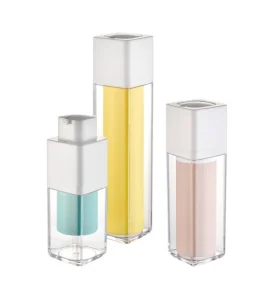
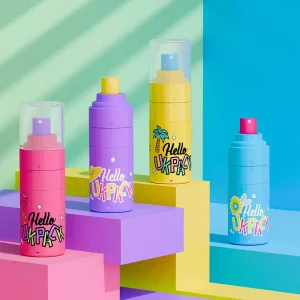
Explore our complete range of specialized packaging, including airless pump bottles, aluminum spray containers, and roll-on vials.

 Aurelia Glass