Choosing skincare packaging is not simply a question of glass versus plastic. The real question is: what materials are safe for skincare packaging? Safety depends on chemical compatibility, migration risk, product stability, temperature exposure, and closure performance. A beautiful airless bottle can still fail if its pump absorbs fragrance oils or allows oxygen inside.
For Chinese skincare brands and packaging suppliers, common options include borosilicate glass, PP, HDPE, PET, aluminum, and multilayer systems. Each material has strengths and weaknesses. Glass offers strong chemical resistance, but it adds weight and breakage risk. PP and HDPE are lightweight, yet additives and recycled content require careful evaluation. Aluminum protects against light, but its inner coating must remain intact. Testing matters.
The OECD’s Global Plastics Outlook reported that packaging generated about 40% of global plastic waste in 2019. UNEP’s Turning off the Tap report also identifies packaging as a major driver of plastic pollution. These figures make material selection an environmental decision, not only a safety decision. Sander Defruyt of the Ellen MacArthur Foundation stated, “We cannot recycle our way out of the plastics crisis.” That warning applies to skincare packaging too.
Reliable suppliers should provide compatibility studies, migration testing, stability data, and traceable material specifications. Chinese manufacturers should also review applicable NMPA requirements and relevant packaging standards. Still, no material is automatically safe. The formula, package, filling process, and storage conditions must be judged together. Sometimes, the most sustainable package is not the lightest one. That deserves more honest reflection.
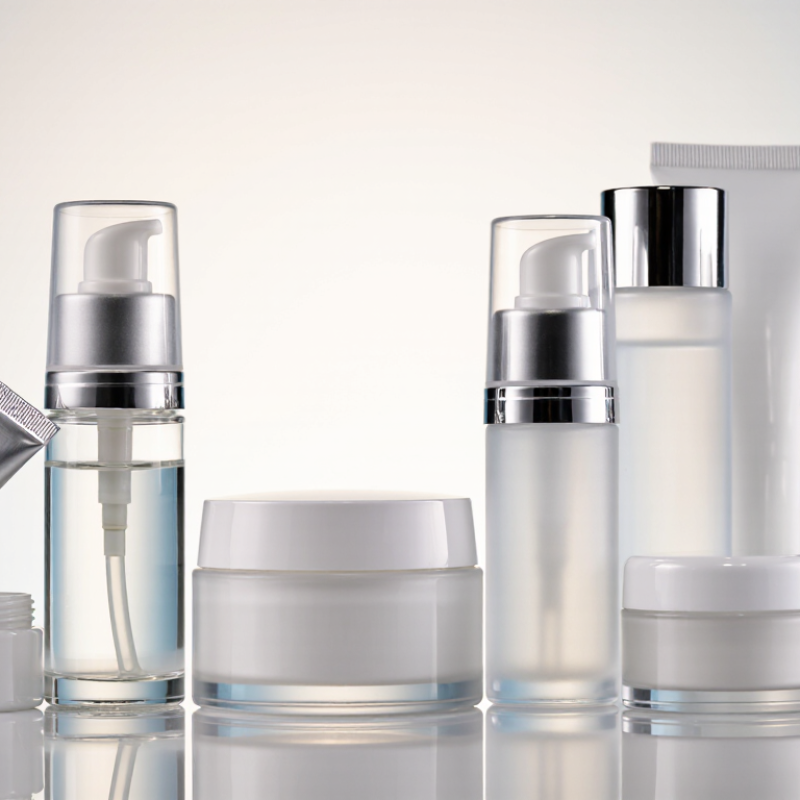
China’s skincare packaging commonly uses glass, PET, PP, PE, and aluminum. Each material suits different formulas. Glass offers strong chemical stability and protects against odors. However, it can break during transport. PET is lightweight and clear, making it suitable for lotions and cleansers. PP and PE work well for creams, tubes, and flexible bottles. Aluminum provides strong light protection, but its inner coating needs careful inspection.
Packaging safety depends on more than the material name. Formula acidity, alcohol content, fragrance oils, and storage temperature can change compatibility. Recycled plastic may reduce waste, but it requires strict control of odors, color, and possible contaminants. Multilayer pumps can protect sensitive formulas effectively, yet they may be difficult to recycle. The classification is useful, but not perfect.
Tips: Ask Chinese suppliers for material declarations, batch records, and compatibility test results. Check seals, pumps, liners, and coatings separately. Request migration or extractables testing when the formula is oily, acidic, or highly active. Review applicable Chinese cosmetic packaging requirements before production. Small pilot batches can reveal swelling, leakage, discoloration, or odor changes. Do not trust appearance alone. A clean-looking package may still perform poorly.
| Material | Common Skincare Applications | Safety Classification | Key Safety Characteristics | Compatibility Considerations | Recyclability in Practice | Typical China Packaging Use |
|---|---|---|---|---|---|---|
| Glass | Serum bottles, cream jars, essential-oil containers, premium cosmetic bottles | Generally very safe and inert | Excellent chemical resistance; does not readily absorb skincare ingredients; suitable for many acidic and oil-based formulas | Heavier and breakable; closures, coatings, inks, and internal pumps must also be assessed | Highly recyclable where collection and color sorting are available; decorative components may reduce recyclability | Common for high-end skincare, facial oils, and products needing strong barrier protection |
| Polypropylene (PP) | Caps, jars, pump components, tubes, inner lids, airless-packaging parts | Generally safe when properly selected | Low density, good moisture resistance, good resistance to many chemicals, and suitable for repeated molding | Some fragrances, solvents, or essential oils may interact with plastics; formula and package compatibility testing is required | Recyclable as plastic code 5, although actual recovery depends on local sorting and recycling systems | Widely used for closures, lightweight jars, tubes, and functional packaging components |
| High-Density Polyethylene (HDPE) | Lotion bottles, cleanser bottles, squeeze bottles, refill containers | Generally safe and widely used | Good chemical resistance, impact resistance, moisture barrier, and low risk of breakage | May be less suitable than glass or specialized barrier structures for oxygen-sensitive formulas | Recyclable as plastic code 2; labels, pumps, multilayer structures, and additives can affect processing | Common for cleansers, body-care products, shampoos, and practical refill packaging |
| Polyethylene Terephthalate (PET) | Transparent bottles, toner bottles, lotion bottles, travel-size containers | Generally safe when compatible with the formula | Clear appearance, good strength, relatively low weight, and useful barrier performance for many water-based products | Strong solvents, concentrated fragrances, and some essential oils can create stress cracking or permeation concerns | Recyclable as plastic code 1; pumps, sleeves, pigments, and multilayer parts should be separated when possible | Frequently used for transparent and lightweight skincare bottles |
| Aluminum | Tubes, tins, caps, aerosol containers, protective outer shells | Safe with a suitable internal coating | Lightweight, strong, highly recyclable, and provides effective protection from light | Bare aluminum can react with certain formulas; coating integrity, seams, and corrosion resistance require testing | Highly recyclable; paint, plastic liners, pumps, and mixed-material assemblies may need special handling | Used for ointments, balms, creams, tubes, and light-sensitive formulations |
| Stainless Steel | Roll-on applicators, spatulas, refillable containers, protective components | Generally safe and corrosion-resistant | Durable, non-porous, resistant to corrosion, and suitable for repeated use when properly maintained | Metal grade, welds, surface finish, and contact with acidic or saline formulas should be verified | Recyclable as metal; mixed-material assemblies may require disassembly | Used mainly for applicators, premium reusable components, and durable packaging accessories |
| Silicone | Flexible applicators, seals, gaskets, dispensing valves, reusable tools | Conditionally safe for intended contact | Flexible, heat-resistant, and generally stable; useful for seals and soft-touch components | Silicone can absorb or retain some low-molecular-weight ingredients; migration and odor testing may be necessary | Not commonly accepted in standard household plastic recycling streams | Used as a functional component rather than the primary container |
| Post-Consumer Recycled Plastic (PCR) | Bottles, jars, caps, and secondary packaging with recycled content | Safe only with controlled quality and suitability checks | Can reduce reliance on virgin resin and support recycled-content goals; properties depend on source and processing | Color, odor, contamination, batch consistency, and regulatory status must be controlled; barrier performance may differ from virgin resin | Potentially recyclable, but the actual outcome depends on polymer type, additives, labels, and local infrastructure | Used for sustainability-focused bottles, jars, caps, and cartons |
| Paperboard and Paper | Folding cartons, outer boxes, inserts, labels, and display packaging | Generally safe for secondary packaging | Renewable-fiber option with low weight and good printability; normally does not directly contain the formula | Not suitable as an unlined primary container for liquids or oils; inks, coatings, adhesives, and laminates affect suitability | Often recyclable when clean and free from incompatible laminates, foils, and excessive coatings | Widely used for cartons, product boxes, instruction inserts, and shipping protection |
Common options include glass, PET, PP, PE, and aluminum.
Glass offers strong chemical stability and helps protect formulas from odors.
PET is lightweight, clear, and suitable for lotions and cleansers.
Aluminum provides strong protection from light.
Acidity, alcohol content, fragrance oils, storage temperature, and active ingredients can change compatibility.
No.
Request material declarations, batch records, batch traceability, and compatibility test results.
Not automatically.
Single-material bottles are usually easier to sort than mixed structures.
No.
Choosing what materials are safe for skincare packaging requires evaluating both material safety and product compatibility. Glass offers excellent chemical resistance and barrier protection, while PET, PP, and HDPE provide lightweight, durable options with different levels of resistance to oils, acids, alcohols, and active ingredients. Aluminum can provide strong light and oxygen protection when properly coated. Selection should consider migration performance under GB 4806 and EU 10/2011 requirements, including the applicable 10 mg/dm² migration limit, as well as the package’s intended use and storage conditions.
Material approval should be supported by container–formula compatibility testing, including stability assessments conducted according to ISO 18811 principles. Manufacturers should also review hygiene controls and production records aligned with ISO 22716. To improve environmental performance, packaging decisions may include verified PCR content, practical recyclability, clear material identification, and designs that support efficient recovery. A safe solution is therefore one that combines regulatory compliance, barrier performance, formula stability, hygienic production, and responsible end-of-life planning.

 Aurelia Glass