In China, beauty packaging is changing from a disposable shell into a repeat-use system. Shoppers now see refill pouches, replaceable cartridges, and modular jars in skincare stores and online livestreams. This shift explains why refillable beauty packaging is trending across both premium and everyday products. A familiar cream jar can remain on a bathroom shelf while only its inner container changes. The experience feels practical, not purely ideological.
Several forces support this movement. China’s large e-commerce market makes packaging highly visible, from unboxing videos to delivery waste. Younger consumers increasingly compare ingredient lists, package materials, refill prices, and brand values before buying. Beauty companies also gain opportunities to build repeat purchases through compatible refills. Some brands use aluminum, glass, or recycled plastic, but material claims still require careful verification. “Eco-friendly” should not be accepted without evidence.
The customer experience remains decisive. A refill must fit securely, open cleanly, and protect sensitive formulas from air, moisture, and contamination. Nobody wants a sustainable package that leaks inside a handbag. Chinese consumers may also question whether a refill costs meaningfully less than a new container. That concern is reasonable. Manufacturing, transport, and recycling systems can reduce the expected environmental benefit when poorly designed. This article examines the commercial, cultural, and practical reasons behind the trend, while recognizing its limitations. Refillable packaging is promising, but it is not automatically sustainable. That distinction deserves attention.
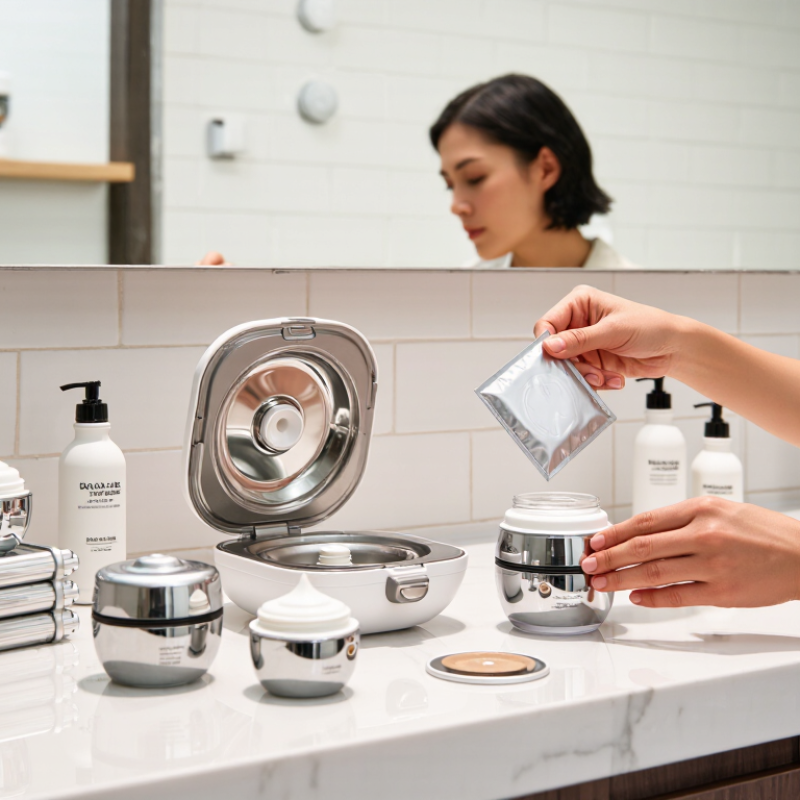
Refillable beauty packaging is gaining attention in China because it connects sustainability with everyday value. In the Chinese market, it means more than keeping a stylish container. Consumers buy a durable outer case, then replace an inner cartridge, pouch, or compact refill. This can reduce repeated packaging purchases and make premium products feel more practical. The model also fits China’s strong e-commerce habits, where refills can arrive in small parcels and be reordered through mobile platforms.
From my market observations, convenience decides whether refillable packaging succeeds. A refill should open easily, prevent leakage, and fit the original container without awkward tools. Clear instructions matter, especially for older shoppers and first-time users. Urban consumers may accept a higher first payment when the refill price feels fair. Yet the system is not automatically greener. Extra shipping materials, complex cartridges, and poor local collection can weaken its environmental value. That limitation deserves honest attention.
Tips: Test the refill process before launch. Measure the time, waste, and mess. Use simple Chinese instructions and show the steps visually. Offer smaller trial refills for cautious customers. Do not assume every household has storage space. Refill designs must match real apartments, delivery routines, and shopping behavior. A beautiful package helps, but reliability builds trust.
| Market Dimension | Verified Data or Policy Signal | What It Means for Refillable Beauty Packaging | Data Status | Source |
|---|---|---|---|---|
| Beauty-market scale | China's retail sales of cosmetics reached RMB 414.2 billion in 2023. | A large and expanding beauty market creates sufficient volume for refill systems, reusable containers, and reverse-logistics services to become commercially viable. | Official statistic | National Bureau of Statistics of China |
| Urban consumer concentration | China's urbanization rate reached 66.16% at the end of 2023. | Dense urban communities, shopping centers, offices, and residential delivery networks make refill collection points and repeat purchasing easier to organize. | Official statistic | National Bureau of Statistics of China |
| Delivery infrastructure | China's express-delivery industry handled approximately 132.07 billion parcels in 2023. | High-frequency parcel delivery can support mail-back refill programs, subscription replenishment, and the return of empty containers, although transport emissions must be controlled. | Official statistic | State Post Bureau of China |
| Plastic-pollution policy | China's national plastic-pollution-control policy sets phased restrictions on selected single-use, non-degradable plastic products and promotes alternatives and reduced consumption. | Refillable packaging fits the policy direction because it reduces the need to manufacture a complete primary package for every purchase. | National policy | China State Council: Plastic-Pollution Control Opinions |
| Packaging-waste reduction | China's packaging policy framework promotes reduced packaging, recyclable materials, standardized packaging, and the development of a circular economy. | Refill formats can reduce repeated use of pumps, caps, jars, and decorative outer packaging when the durable component is designed for multiple use cycles. | Policy direction | China State Council: Circular-Economy Development Plan |
| Consumer-convenience requirement | China has a highly developed mobile-commerce and digital-payment environment, enabling QR-code instructions, membership accounts, digital coupons, and automated replenishment. | The strongest refill models are likely to combine physical packaging with digital reminders, loyalty benefits, authenticity information, and convenient ordering. | Market infrastructure | China Internet Network Information Center |
| Hygiene and product-safety expectations | Cosmetics placed on the Chinese market are subject to China's cosmetics regulatory system, including requirements concerning product safety, registration or filing, labeling, and quality control. | Refillable designs must prevent contamination, support controlled filling, preserve product traceability, and clearly distinguish the original container from the refill unit. | Regulatory requirement | Regulations on the Supervision and Administration of Cosmetics |
| Refillable beauty market measurement | A single official national statistic for the market size or penetration rate of refillable beauty packaging is not separately disclosed in China's standard cosmetics retail classifications. | Market claims should distinguish between total cosmetics-market data, sustainability surveys, pilot-program results, and verified refill transactions rather than presenting refillable packaging as an established national market share. | Not separately reported | National Bureau of Statistics of China |
| Recommended commercial model | For the Chinese market, refillability is most practical when supported by standardized refill cartridges, clear usage instructions, convenient online replenishment, and accessible collection or exchange channels. | The value proposition is not only lower material use; it also includes convenience, perceived modernity, membership engagement, and a more visible sustainability story. | Market interpretation | Circular-Economy Policy Framework |
Consumers keep a durable outer container and replace its inner cartridge, pouch, or compact refill. It is a repeated-use system.
Refills can cost less than complete packages and fit inside bathroom drawers or travel bags. Convenience matters greatly.
Mobile shopping allows customers to reorder small refills and receive them in compact parcels. Delivery routines influence success.
It should open smoothly, fit correctly, and prevent leakage. Clear Chinese instructions and visual steps help older shoppers.
It can reduce repeated containers, plastic use, and packaging waste. The benefit depends on repeated reuse and suitable collection.
No. Extra shipping materials, complex cartridges, and poor recycling can weaken its environmental value. The claim needs honest testing.
Keep the outer container dry and clean, then reuse it several times. Excessive washing may waste water.
They should measure opening time, waste, leakage, and mess. Small trial refills can reveal problems early.
Check the price, material labels, refill fit, and local collection options. A beautiful package may still remain unused.
It depends on real habits, storage space, and reliable design. Some assumptions may fail in small apartments.
Refillable beauty packaging is becoming an important development in China as consumers and companies look for more practical ways to reduce packaging waste. In this market, refillable systems usually allow customers to keep a durable outer container while replacing only the inner product or refill unit. The trend reflects growing interest in responsible consumption, product value, and packaging designs that fit modern lifestyles. Understanding why refillable beauty packaging is trending requires examining both environmental awareness and changing expectations around convenience, quality, and cost.
Beauty companies are developing refill systems with easy-to-use formats, secure containers, and attractive designs that encourage repeat purchases. These solutions can reduce the amount of material used over time and may lower long-term costs for consumers. However, future growth will depend on affordable refill prices, reliable product protection, clear instructions, convenient purchasing channels, and effective recycling or return systems. Consumer education and consistent industry standards will also be important in making refillable packaging a familiar and trusted choice across China.

 Aurelia Glass