How to Choose Cosmetic Packaging for Longer Shelf Life 2026

Time:2026-09-24 Author:Isabella
0%

Choosing cosmetic packaging in 2026 requires more than matching colors, shapes, and current market trends. Packaging is part of the product’s preservation system. It controls exposure to oxygen, moisture, light, heat, and repeated handling. These factors can change a cream’s texture, weaken active ingredients, or affect fragrance over time. Understanding how cosmetic packaging affects product shelf life helps brands make more reliable decisions before production begins.

A stable formula can still deteriorate inside an unsuitable container. For example, a clear jar placed near a bathroom window may expose light-sensitive ingredients to daily sunlight. A wide-mouth jar may also invite air, water droplets, and repeated finger contact. Airless pumps, opaque tubes, and well-designed closures can reduce these risks. However, no format solves every problem. Material compatibility, seal performance, filling accuracy, and consumer habits must be evaluated together.

Real-world experience matters here. Packaging teams should examine pilot samples, monitor color and odor changes, and test containers under temperature and humidity stress. Professional guidance from cosmetic scientists and qualified packaging suppliers can reveal weaknesses that visual inspection misses. Reliable decisions should also reflect recognized quality practices and documented stability data. A premium package is not automatically protective. Sometimes, a simpler tube performs better than an attractive jar. That detail deserves honest reflection.

This guide explores practical ways to select cosmetic packaging for longer shelf life in 2026. It focuses on barrier protection, dispensing design, material selection, testing, and responsible packaging choices. The goal is not to promise perfection, but to reduce avoidable product failure.
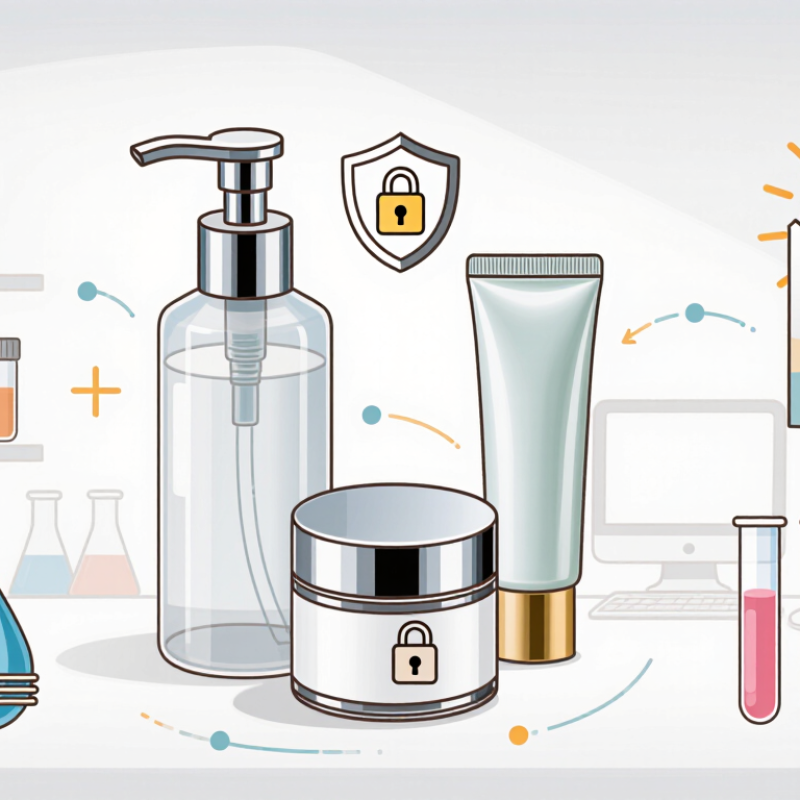
How to Choose Cosmetic Packaging for Longer Shelf Life 2026

Define Shelf-Life Targets Using EU’s 30-Month and 12M PAO Rules

For cosmetics sold in the EU, set the shelf-life target before choosing the pack. Products with a minimum durability of 30 months or less generally need a “best used before the end of” date. Products lasting longer than 30 months generally do not need that date, but may need a Period After Opening (PAO) symbol when the product can deteriorate after opening. The familiar open-jar symbol, such as “12M,” means use within 12 months after opening. It does not mean the product stays suitable for 12 months unopened.

Match the package to the product’s risks. A water-based cream in a wide-mouth jar may face repeated contact with fingers and air; a pump can reduce that exposure. But a pump is not a guarantee. Test the filled product in its final packaging for stability, compatibility, and dispensing performance. Check changes in smell, color, texture, and function over time. Keep records of test conditions and results. Real use can be messier than a lab schedule.

Choose a PAO based on evidence, not guesswork. If testing supports 12 months after opening, label accordingly; if evidence is limited, revisit the target and packaging choice. Some details may still surprise you. A tight cap helps, but it cannot fix an unsuitable formula.

How to Choose Cosmetic Packaging for Longer Shelf Life in 2026

Define shelf-life targets using the EU 30-month durability threshold and the 12M Period After Opening (PAO) example.

How to interpret the chart: Under EU Regulation (EC) No 1223/2009, products with a minimum durability of 30 months or less must display a minimum durability date. When minimum durability exceeds 30 months, the Period After Opening symbol is generally used when applicable. “12M” means the product is intended to remain suitable for 12 months after opening; it is not a universal legal PAO value. Packaging selection should be supported by stability, compatibility, preservative, and in-use testing.
Packaging priorities: use airless or low-air-exposure systems for oxidation-sensitive formulas, minimize headspace, select compatible materials, and protect light-sensitive products with opaque or UV-resistant packaging.

Match Formula Risks with pH, Oxygen, Light, and Water Activity Data

Longer cosmetic shelf life begins with the formula, not the package shape. Measure pH, water activity, oxygen sensitivity, and light response before selecting materials. Low-pH emulsions may need containers that limit oxygen entry and repeated hand contact. Formulas containing botanical colors can fade under store lighting. A small opening can matter. It changes exposure each day. I have seen attractive jars perform poorly when users scoop product with wet fingers. Packaging decisions should follow stability data, not appearance alone. Test the filled package under heat, freeze-thaw cycles, and normal opening patterns. Results often challenge early assumptions.

Tips: Match high oxygen risk with an airless or tightly sealed system, then verify actual oxygen transmission. Use opaque or UV-resistant packaging for light-sensitive ingredients. For moisture-sensitive products, assess water activity after filling, not only in the bulk sample. Check pH drift, odor, color, viscosity, and microbial results at planned intervals. Keep headspace consistent. It is easy to overlook. Test pumps, caps, and liners for compatibility. Swelling or stress cracks can appear slowly. Do not trust one accelerated test. Real-time data may tell a different story.

A reliable package protects the formula during manufacturing, shipping, storage, and consumer use. Document temperature, humidity, fill weight, and opening frequency. Expert review helps interpret borderline changes, but judgment must remain evidence-based. Some conclusions will stay uncertain. That is normal. Reassess packaging when the formula, supplier, or dispensing method changes.

Specify OTR and WVTR Limits Using ASTM D3985 and ASTM F1249

How to Choose Cosmetic Packaging for Longer Shelf Life in 2026

A longer shelf life starts with measurable oxygen and moisture targets. Specify an oxygen transmission rate (OTR) limit using ASTM D3985. This method measures oxygen passing through a packaging material under controlled conditions. Set the limit according to the formula’s oxidation risk, fill volume, headspace, and intended storage period.

Moisture control needs equal attention. Use ASTM F1249 to evaluate the water vapor transmission rate (WVTR). This method helps measure moisture movement through films and flexible structures. A low WVTR can protect emulsions, powders, and water-sensitive ingredients. Define test temperature and relative humidity clearly. Small changes can affect the result.

Do not copy limits from another package. That approach often fails. Test the actual container, closure, seal, and label structure when possible. A laboratory film result may not represent a finished package with creases or weak seals. Record conditioning time, test area, gas flow, and specimen thickness. Then create an acceptance range, not just one attractive number.

A practical specification might state: OTR no higher than a defined value at a selected temperature and humidity, with WVTR controlled under the same documented conditions. The exact limits require compatibility testing with the formulation. Real storage studies may reveal problems that instrument data misses. Packaging decisions deserve review when texture, fragrance, or color changes appear before the planned expiry period.

How to Choose Cosmetic Packaging for Longer Shelf Life 2026 – Specify OTR and WVTR Limits Using ASTM D3985 and ASTM F1249

Product / Formula Risk Recommended Packaging Structure Target OTR Limit
(ASTM D3985)
Target WVTR Limit
(ASTM F1249)
Typical Test Conditions Packaging Selection Guidance
Water-based cream or lotion
Moderate oxidation and moisture sensitivity
HDPE or PP container with a low-permeability liner and induction-sealed closure ≤ 1.0 cm³/m²/day ≤ 1.0 g/m²/day 23°C; oxygen test at approximately 0% RH; water-vapor test at 38°C and 90% RH Use an airless dispenser when repeated opening and headspace exposure could accelerate oxidation or contamination.
Antioxidant serum
Highly sensitive to oxygen and light
Opaque glass or multilayer plastic with an airless pump and low-permeability seal ≤ 0.10 cm³/m²/day ≤ 0.50 g/m²/day 23°C; oxygen test at approximately 0% RH; water-vapor test at 38°C and 90% RH Prioritize oxygen barrier, UV protection, minimal headspace, and a closure that limits air ingress during dispensing.
Retinol or retinoid formulation
Oxygen, light, and moisture sensitive
Opaque multilayer tube or airless pack with EVOH or foil barrier layer ≤ 0.05 cm³/m²/day ≤ 0.20 g/m²/day 23°C; oxygen test at approximately 0% RH; water-vapor test at 38°C and 90% RH Validate the complete package, including the pump, tube shoulder, cap, welds, and seals; barrier performance alone is not sufficient.
Vitamin C or acidic active serum
Oxidation and moisture sensitive
Amber or opaque glass with a sealed dropper, or an airless multilayer dispenser ≤ 0.10 cm³/m²/day ≤ 0.50 g/m²/day 23°C; oxygen test at approximately 0% RH; water-vapor test at 38°C and 90% RH Use light-protective packaging and minimize oxygen exchange; confirm compatibility between the formula, elastomer, adhesive, and barrier layer.
Powder cosmetic
Moisture-sensitive pressed or loose powder
PP or glass jar with gasketed lid and induction or foil seal ≤ 1.0 cm³/m²/day ≤ 0.10 g/m²/day 23°C; oxygen test at approximately 0% RH; water-vapor test at 38°C and 90% RH Moisture control is usually more important than oxygen control; test the gasket and closure because leakage often occurs at the seal.
Fragrance or volatile formula
Loss of volatile ingredients and oxygen exposure
Glass bottle with chemically resistant liner, crimped pump, and tightly fitting cap ≤ 0.10 cm³/m²/day ≤ 0.50 g/m²/day 23°C; oxygen test at approximately 0% RH; water-vapor test at 38°C and 90% RH Glass generally provides very low gas and vapor permeation; evaluate pump crimping, gasket materials, evaporation, and leakage separately.
Natural or botanical emulsion
Variable oxidation and microbial risk
Airless multilayer plastic or opaque glass with a tamper-evident seal ≤ 0.50 cm³/m²/day ≤ 0.50 g/m²/day 23°C; oxygen test at approximately 0% RH; water-vapor test at 38°C and 90% RH Combine barrier packaging with preservative efficacy, compatibility, and in-use contamination testing; packaging cannot replace microbiological controls.
Measurement and specification notes: OTR means oxygen transmission rate and is commonly reported in cm³/m²/day. WVTR means water vapor transmission rate and is commonly reported in g/m²/day. ASTM D3985 is used for oxygen gas transmission testing with a coulometric sensor, while ASTM F1249 is used for water vapor transmission testing with a modulated infrared sensor. The limits above are practical packaging-development targets rather than universal regulatory requirements. Final limits should be confirmed through product stability studies, package integrity testing, complete-package testing, and the actual storage conditions.

Evaluate UV–Visible Light Protection Through Accelerated Aging Tests

Cosmetic packaging can protect a formula long after filling, but light exposure deserves careful testing. Ultraviolet and visible light may fade pigments, weaken fragrances, or change emulsion texture. Clear containers often look attractive, yet they can expose sensitive products to daily sunlight. I recommend testing the finished formula inside its intended package, not in a laboratory glass vial. That detail matters.

Tips: Prepare identical filled samples and keep a dark control sample for comparison. Expose packages to controlled UV and visible light cycles in an accredited laboratory. Record temperature, humidity, and light intensity. Inspect samples at scheduled intervals, such as one, two, and four weeks. Check color with an instrument, then assess odor, viscosity, pH, and separation. A trained evaluator should document visible changes with dated photographs. Small changes can become meaningful later.

Accelerated aging can reveal weaknesses quickly, but it does not perfectly predict real shelf life. Light sources, heat, and oxygen may interact differently in storage, transport, and bathrooms. Use the results to compare opaque, tinted, or UV-blocking packaging options. Confirm that the closure still seals after testing. I have seen attractive packaging fail because the cap admitted air. That outcome is easy to overlook. Repeating the test with production-scale components may expose variation between laboratory samples and actual manufacturing.

Validate Closures and Microbial Safety Under ISO 22716 and ISO 11930

Cosmetic packaging should be selected as a microbial control system, not merely a visual container. Cosmetics Europe’s 2023 Market Performance Report recorded €88.8 billion in European retail sales. That scale makes small closure failures commercially significant. Tiny gaps matter.

Under ISO 22716, manufacturers should control packaging materials, filling conditions, storage, and handling. Closure validation should include torque checks, leak testing, transport simulation, and repeated opening cycles. Test the actual formula and container together. A stable cream can behave differently in a wide-mouth jar.

ISO 11930 provides the framework for evaluating antimicrobial protection through a controlled microbial challenge test. The test uses defined microorganisms and scheduled observations through 28 days. Packaging performance still matters during that period. A pump may reduce finger contact, but it cannot compensate for poor sealing or contaminated components. Check the cap, gasket, dip tube, and dispensing orifice individually. ISO 22716 also supports documented cleaning and material traceability, which often reveal hidden risks during investigations.

Smithers’ 2024 packaging market analysis highlights continued growth in higher-performance and sustainable packaging formats. However, recycled content may vary in barrier performance and dimensional consistency. This is where judgment is needed. A closure may pass one laboratory test yet fail after heat exposure, vibration, or consumer misuse. I would recheck torque after aging, inspect microscopic deformation, and repeat microbial testing when the design changes. Perfect validation is unlikely. Transparent records are essential.

FAQS

Why should packaging have oxygen transmission limits?

Oxygen can accelerate oxidation, changing fragrance, color, texture, or formula stability. Set a measurable limit. Consider fill volume, headspace, formula sensitivity, and storage time.

How is moisture movement evaluated?

Use a standardized water vapor transmission test for films and flexible packaging. Low moisture transmission helps protect powders, emulsions, and water-sensitive ingredients. Humidity matters greatly.

Can I copy oxygen or moisture limits from another package?

Usually, no. Different closures, seals, labels, and container shapes perform differently. A copied limit may look precise but still fail in practice.

Should the complete package be tested?

Yes, when possible. Test the container, closure, seal, and label structure together. Creases and weak seals can increase gas or moisture movement.

Which test conditions should be recorded?

Record temperature, relative humidity, conditioning time, test area, gas flow, and specimen thickness. Small changes can alter the result. Details matter.

How can packaging protect formulas from light?

Compare clear, tinted, opaque, or light-blocking packages under controlled ultraviolet and visible-light exposure. Sensitive formulas may fade or change texture. Appearance alone proves little.

What should be checked during accelerated light aging?

Compare filled test samples with a sample kept in darkness. Inspect them after one, two, and four weeks. Measure color, odor, viscosity, pH, and separation. Photograph visible changes with dates.

Does accelerated aging perfectly predict real shelf life?

No. Laboratory light, heat, and oxygen may behave differently during transport or bathroom storage. Use the results for comparison, not certainty. Real storage studies may reveal missed problems.

Why should the closure be checked after light testing?

Heat and exposure can affect sealing performance. A cap may admit air even when the container looks attractive. That weakness is easy to miss. Repeat testing with production-scale components when possible.

Conclusion

Choosing the right cosmetic packaging is essential for protecting formula quality and extending usability. To understand how cosmetic packaging affects product shelf life, begin by setting clear targets based on the EU’s 30-month shelf-life rule and the 12M PAO requirement where applicable. Packaging decisions should reflect the formula’s sensitivity to pH changes, oxygen exposure, light, moisture, and water activity. Airless systems, opaque materials, and well-sealed containers may help reduce contamination and degradation risks when matched to the product’s specific needs.

Performance should be verified with measurable specifications, including oxygen transmission rate (OTR) and water vapor transmission rate (WVTR), using suitable methods such as ASTM D3985 and ASTM F1249. UV–visible light protection can be assessed through accelerated aging tests that compare appearance, odor, color, and performance over time. Finally, closures should be tested for compatibility, leakage, and repeated-use reliability, while microbial safety and preservation effectiveness should be validated under ISO 22716 and ISO 11930. This evidence-based process supports safer, more stable products and more reliable shelf-life claims.

Isabella

Isabella

Isabella is a dedicated marketing professional with a sharp focus on driving brand growth and engagement through strategic content creation. With an extensive background in digital marketing, she combines her passion for storytelling with her keen understanding of industry trends to deliver......