China Best Packaging for Sensitive Skincare Formulas?

Time:2026-10-09 Author:Sienna
0%

Choosing the right container can protect a sensitive skincare formula before it reaches the consumer. The key question is simple: what packaging is best for sensitive skincare formulas? In practice, the answer depends on the formula’s oxygen sensitivity, light exposure, viscosity, and preservative system. A vitamin C serum may need an opaque, airless pump to reduce oxidation. A delicate cream may perform better in a low-headspace jar alternative, especially when dispensing control matters.

Packaging is part of product performance.

From hands-on formulation and filling experience, airless pumps often provide a strong balance of protection, hygiene, and convenient dosing. They limit repeated air exchange and reduce direct finger contact. Opaque or UV-resistant materials can also help protect retinoids, botanical extracts, and other light-sensitive ingredients. However, “airless” does not guarantee compatibility. Some formulas interact with plastics, elastomers, or pump components over time. That detail is easy to overlook.

A reliable selection process includes compatibility testing, stability testing, dose testing, and transport simulation. Observe discoloration, odor changes, separation, leakage, and pump failure. Test the package after heat, cold, vibration, and repeated use. Glass can feel premium, but it is heavier and more breakable. Plastic may improve shipping resilience, yet its barrier performance varies widely. The best choice is rarely the most attractive one on a sample shelf. It should protect the formula consistently, dispense accurately, and remain safe throughout its intended shelf life. More testing is always better. Still, even careful testing has limits, so packaging decisions should be reviewed with qualified formulation, quality, and packaging specialists.
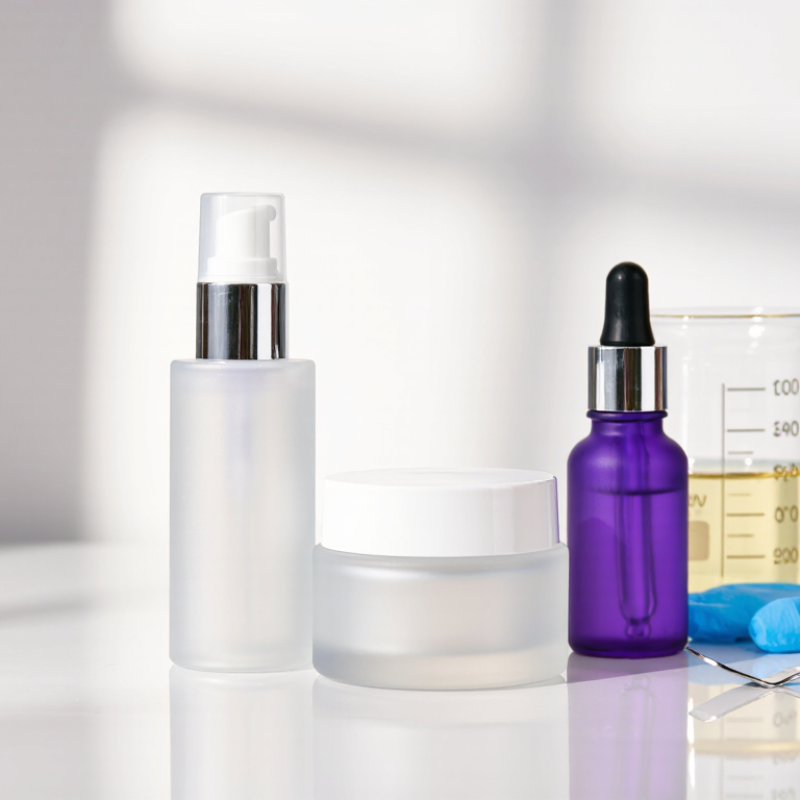
China Best Packaging for Sensitive Skincare Formulas?

What Makes Packaging Suitable for Sensitive Skincare Formulas?

Sensitive skincare formulas need more than attractive containers. They need controlled contact with air, light, moisture, and microbes. Packaging should also protect fragile ingredients during filling, shipping, and daily bathroom use.

Smithers’ 2024 packaging analysis identifies barrier performance and material compatibility as major priorities for advanced cosmetic packaging. Airless pumps can reduce repeated oxygen exposure and limit direct finger contact. Opaque or UV-resistant materials help protect light-sensitive ingredients. However, “airless” does not automatically mean safer. The remaining headspace, valve design, and dispensing accuracy still require testing.

The packaging must match the formula.

Compatibility testing should examine odor transfer, discoloration, swelling, cracking, leakage, and ingredient adsorption. ISO 22716 provides recognized guidance for cosmetic manufacturing and quality control. ISO 15378 offers a stricter reference for primary packaging quality systems, especially where contamination control matters. Practical tests should include accelerated stability studies, transport simulation, pump-cycle testing, and microbial evaluations.

Small details matter. A narrow opening can reduce exposure. A smooth inner wall can reduce residue. Clear plastic may look premium, but it can weaken protection against light. Refillable systems may reduce material use, yet cleaning and refill handling can introduce new risks. This is where packaging decisions become less comfortable. No package is perfect. A supplier should provide migration data, material specifications, batch traceability, and documented test results, not only attractive samples. China’s packaging sector offers strong manufacturing flexibility, but suitability depends on verified performance, not production speed or appearance.

How to Evaluate China-Made Packaging Materials and Product Safety

China Best Packaging for Sensitive Skincare Formulas?

How to Evaluate China-Made Packaging Materials and Product Safety

China-made packaging can support sensitive skincare formulas when material selection is evidence-based. Country of origin alone does not determine safety. During a practical evaluation, inspect the container, closure, inner coating, and dispensing path. A pale emulsion may react differently from a clear water-based serum. High-risk contact points deserve attention.

Request material specifications, batch records, and certificates from the packaging supplier. Ask for migration testing, compatibility studies, and heavy-metal screening where appropriate. Confirm that testing used the actual formula, not only a similar liquid. Check pump accuracy after repeated use. Look for odor, color change, swelling, leakage, or flakes after heat and cold exposure. Product safety also depends on clean production, controlled storage, traceability, and documented quality inspections.

Tips: Test pilot samples for at least eight to twelve weeks. Fill them in production conditions. Compare the first dose with the final dose. Keep sealed samples for reference. An audit can reveal dust, mixed components, or weak inspection habits. Still, no checklist is perfect. I would review unexpected results twice, because rushed approvals often hide small failures. Glass may reduce interaction, but it can break during transport. Airless packaging may protect formulas, yet its pump can waste product. Select the material through evidence, not appearance.

Which Packaging Types Best Protect Sensitive Skincare Products?

Sensitive skincare formulas need protection from light, oxygen, moisture, and repeated contact. Airless pumps usually perform well because they reduce air exposure and limit finger contact. Opaque tubes also help protect light-sensitive creams. For very delicate emulsions, single-dose capsules can provide stronger hygiene control, although they create more material waste.

The packaging material matters as much as the format. High-barrier plastic can resist oxygen and moisture while remaining lightweight. Glass offers strong chemical stability, but it can break and increase shipping weight. According to Smithers’ 2023 sustainable packaging report, the global sustainable packaging market could reach about 393.9 billion dollars by 2028. This growth shows a difficult trade-off: protection, recyclability, and low material use rarely align perfectly. A 2023 review in Cosmetics also noted that packaging may represent 20–40% of a cosmetic product’s environmental impact. More testing is needed, not more decoration.

Tips: Choose opaque airless pumps for oxygen-sensitive formulas. Use narrow dispensing openings for low-preservative products. Test the formula with its final container under heat, light, and vibration. ISO 175 can support plastic compatibility testing, while ISO 11930 helps assess preservative effectiveness. Do not assume “airless” means contamination-proof. I still find weak points around seals, pumps, and closure systems. These small details can quietly reduce product stability.

China Best Packaging for Sensitive Skincare Formulas?

Which Packaging Types Best Protect Sensitive Skincare Products?

The chart compares common packaging formats using relative protection ratings from 1 (low) to 5 (high). Opaque airless pumps generally provide the strongest overall protection by limiting light, oxygen exposure, and repeated user contact. Amber glass offers strong light and chemical protection, while jars provide weaker protection because the formula is repeatedly exposed to air and fingers. Actual performance depends on the formulation, closure design, material grade, and packaging validation tests.

How Chinese Manufacturers Control Packaging Quality and Compatibility

China Best Packaging for Sensitive Skincare Formulas?

Sensitive skincare formulas need more than attractive packaging. They require controlled materials, stable processing, and documented compatibility testing. Chinese manufacturers often manage this through incoming material inspections, clean production areas, and batch-level quality records. A practical audit should review resin specifications, closure dimensions, torque data, and supplier traceability.

Packaging compatibility testing should match the formula’s real risks. Manufacturers may run accelerated aging, freeze-thaw cycles, leakage checks, and migration assessments. They also inspect pumps, tubes, and airless systems for dosage consistency. Small defects matter. A slightly loose actuator can expose a formula to air. A poor inner coating may affect color, odor, or viscosity. A clean sample is not proof of long-term safety. This is where projects sometimes need more time than expected.

Tips: Request samples from multiple production batches. Compare smell, color, weight, and dispensing performance. Ask for test methods, acceptance limits, and corrective-action records. Confirm that packaging materials match the final formula, not only a similar reference product. Keep retain samples for later review. Some teams skip this step, and regret usually arrives after scale-up.

How to Select the Right China Packaging Supplier for Sensitive Formulas

How to Select the Right China Packaging Supplier for Sensitive Formulas

Sensitive skincare formulas need more than attractive containers. Select a China packaging supplier with proven experience in low-reactivity materials and controlled production. Ask for resin specifications, coating details, and records for each production batch. Airless pumps, opaque bottles, and tight seals can reduce oxygen, light, and contamination risks. However, packaging performance depends on the formula, not appearance alone.

Request compatibility testing with your actual formula, including stability, leakage, odor transfer, and color changes. Ask whether the supplier can support extractables and leachables assessments when needed. A reliable factory should provide samples from regular production equipment, not only carefully prepared samples. Visit or audit the facility if possible. Review cleanliness controls, inspection procedures, traceability, and corrective-action records. Small details matter.

Tips: Test the formula. Check the closure torque. Store samples under heat and cold conditions. Compare samples after several weeks. Also, confirm minimum order quantities, lead times, replacement policies, and communication practices before approval. No supplier is perfect. A missed detail can still occur, even after a careful audit. Keep written specifications and approve every design change. This discipline may feel slow, but it protects sensitive formulas from avoidable packaging failures.

China Best Packaging for Sensitive Skincare Formulas? - How to Select the Right China Packaging Supplier for Sensitive Formulas
Evaluation Dimension Recommended Packaging Direction Why It Matters for Sensitive Formulas Practical Supplier Requirement Evidence to Request
Material Compatibility Preferred
Glass, PP, HDPE, or validated multilayer structures, selected according to the formula.
Sensitive formulas may react with packaging through adsorption, absorption, permeation, corrosion, or extractables and leachables. The supplier should perform formula-specific compatibility testing rather than recommend packaging based only on appearance or price. Material specification, resin or glass type, colorant information, liner details, and compatibility-test protocol.
Light Protection Recommended
Opaque, amber, colored, or UV-reducing packaging when the formula contains light-sensitive ingredients.
Light can accelerate degradation of certain ingredients, including some antioxidants, botanical components, and color-sensitive actives. The supplier should provide color consistency and, where relevant, light-transmission data for the finished package. Spectral or light-transmission test results, color standard, coating specification, and sample approval procedure.
Oxygen and Moisture Barrier High Priority
Airless systems, multilayer plastic, glass, or metal structures may be considered based on oxygen and moisture sensitivity.
Oxygen and water vapor can affect oxidation, viscosity, odor, preservative performance, and overall formula stability. Barrier performance should be evaluated for the complete package, including the closure, pump, liner, seals, and dispensing pathway. Oxygen transmission rate, water vapor transmission rate, seal integrity data, and finished-pack stability results.
Dispensing System Preferred
Airless pump or controlled-dose dispenser for formulas that are oxidation-sensitive or vulnerable to repeated finger contact.
Reduced product exposure can help limit air exchange, contamination from handling, and inconsistent dosing. The supplier should validate priming, dosage consistency, residual product, leakage resistance, and operation at different temperatures. Dose-weight test, actuation test, leakage test, reverse-flow test, and product-residue assessment.
Extractables and Leachables Risk Mandatory Review
Use low-migration materials, suitable inks, adhesives, coatings, elastomers, and internal components.
Substances from packaging components may migrate into the formula and affect safety, odor, color, efficacy, or regulatory assessment. All components that contact the formula or its headspace should be identified and evaluated under realistic storage conditions. Full component list, declarations of compliance, raw-material safety documents, and migration or chemical-screening reports where applicable.
Preservative-System Compatibility Formula-Specific
Select packaging only after testing the complete formula and preservation system.
Packaging can adsorb preservatives or alter the conditions that support microbial protection, especially in low-water or emulsified products. Packaging validation should be combined with microbial quality testing and preservative efficacy testing performed by the responsible product team. Preservative efficacy results, microbial limits, package-use simulation, and in-use stability data.
Seal and Closure Integrity Critical
Use reliable neck finishes, liners, gaskets, welds, or crimping systems appropriate to the formula.
Poor sealing can permit leakage, evaporation, oxygen ingress, moisture exchange, and external contamination. The supplier should define torque, seal dimensions, closure tolerances, and acceptance criteria for the assembled package. Torque range, dimensional inspection report, vacuum or pressure test, transport simulation, and batch quality records.
Stability and Transport Testing Required Before Scale-Up
Test the filled package under real-time, accelerated, freeze-thaw, vibration, and temperature-cycling conditions as appropriate.
Formula-package interactions may appear only after extended storage or during shipping conditions. Testing should cover appearance, odor, color, viscosity, pH, microbial quality, package functionality, and leakage. Stability protocol, sample quantities, test schedule, acceptance criteria, and final report using production-intent components.
Manufacturing Quality Control Supplier Qualification
Choose a supplier with controlled incoming inspection, process control, cleanliness procedures, and traceability.
Dimensional variation, particles, flash, odor, color drift, and contamination can compromise sensitive skincare packaging. Require documented inspection standards and a defined process for handling nonconforming products and corrective actions. Quality manual, inspection checklist, defect classification, batch traceability sample, audit records, and corrective-action procedure.
Minimum Order and Scale-Up Flexibility Commercial Fit
Confirm trial, pilot, and mass-production quantities before approving the supplier.
Sensitive formulas often require pilot compatibility work before a large packaging commitment is made. The supplier should clearly separate prototype, pilot, and production pricing, tooling charges, lead times, and reorder conditions. Written quotation, tooling ownership terms, sample lead time, production lead time, capacity statement, and reorder policy.
Regulatory and Documentation Support Essential
Select a supplier able to provide accurate technical and compliance documentation for the target market.
Documentation supports safety assessment, product information files, customer audits, and market-entry requirements. Documentation should identify materials, additives, coatings, inks, adhesives, allergens or restricted substances where relevant, and manufacturing location. Technical data sheet, safety documentation, declarations of compliance, restricted-substance statement, and change-notification policy.
Selection principle: No packaging material is universally best for every sensitive skincare formula. Final approval should be based on formula-specific compatibility, stability, microbiological, barrier, dispensing, and transport testing using production-intent packaging.

FAQS

What makes packaging suitable for sensitive skincare formulas?

It should control exposure to air, light, moisture, and microbes. It must also survive filling, shipping, and bathroom use.

Does airless packaging always provide better protection?

No. Airless is not magic. Test headspace, valve design, dispensing accuracy, and oxygen exposure during repeated use.

Which materials help protect light-sensitive formulas?

Opaque or UV-resistant materials can reduce light exposure. Clear plastic may look premium but offer weaker protection.

What compatibility problems should packaging tests examine?

Check odor transfer, discoloration, swelling, cracking, leakage, residue, and ingredient adsorption. Small changes can signal larger failures.

How can suppliers prove packaging quality?

Request material specifications, migration data, batch traceability, and documented test results. Attractive samples alone prove very little.

How should China-made packaging be evaluated?

Inspect the container, closure, inner coating, and dispensing path. Country of origin does not determine suitability.

What testing should be performed before approval?

Use the actual formula in pilot samples. Run stability, transport, pump-cycle, and microbial evaluations under realistic conditions.

How long should pilot samples be tested?

Test them for eight to twelve weeks when possible. Compare the first dose with the final dose and keep sealed reference samples.

Can refillable packaging create new risks?

Yes. Cleaning and refill handling may introduce contamination. Lower material use is helpful, but hygiene still needs proof.

What packaging details are easy to overlook?

A narrow opening can reduce exposure. Smooth inner walls may reduce residue. Glass can reduce interaction but may break in transit.

Conclusion

Choosing suitable packaging for sensitive skincare formulas requires more than an attractive appearance. The package should minimize exposure to air, light, moisture, heat, and contamination while using materials that are chemically stable and safe for direct product contact. To assess China-made packaging, buyers should review material specifications, safety documentation, migration testing, sealing performance, and compatibility results with the actual formula. The key question is: what packaging is best for sensitive skincare formulas? In many cases, airless pumps, well-sealed tubes, and opaque containers provide stronger protection than open jars, especially for products containing delicate or oxidation-sensitive ingredients.

Reliable Chinese manufacturers should maintain consistent quality controls, including incoming material inspection, dimensional testing, leak testing, cleanliness checks, filling trials, and stability or compatibility evaluations. When selecting a supplier, consider manufacturing experience, testing capabilities, production transparency, sample quality, communication, and willingness to support customized validation. A careful supplier-selection process helps ensure that the final packaging protects product performance, supports user safety, and remains reliable throughout storage and use.

Sienna

Sienna

Sienna is a skilled marketing professional with a deep expertise in our company’s core products and services. With a passion for innovation and detail, she plays a pivotal role in crafting insightful blog posts that not only highlight the unique features of our offerings but also provide valuable......